
Featured JNT Authors
A Brief History of JNT
A Brief History of JNT by Paul Bruss This issue marks the beginning of the 50th volume of The Journal of Narrative Theory, and a brief comment about the journal’s origins and its relationship to another journal, Narrative, may help…
JNT 50.1 Featured Author: Dr. Ruchi Mundeja
Dr. Ruchi Mundeja “Everyone lives in a story,” says Tridib – in one of my all-time favorite lines – in Amitav Ghosh’s The Shadow Lines. Does our critical work also take succor from stories? How do scholarly output and story,…

JNT 49.3 Featured Author: Dr. Samantha Pinto
Dr. Samantha Pinto I have small children, so I find myself at various natural history and children’s science museums across the country, as well as awash in dinosaur and prehistoric animal factbooks at home. As someone who remains attentive –…
JNT 49.3 Featured Author: Dr. Christine Hume
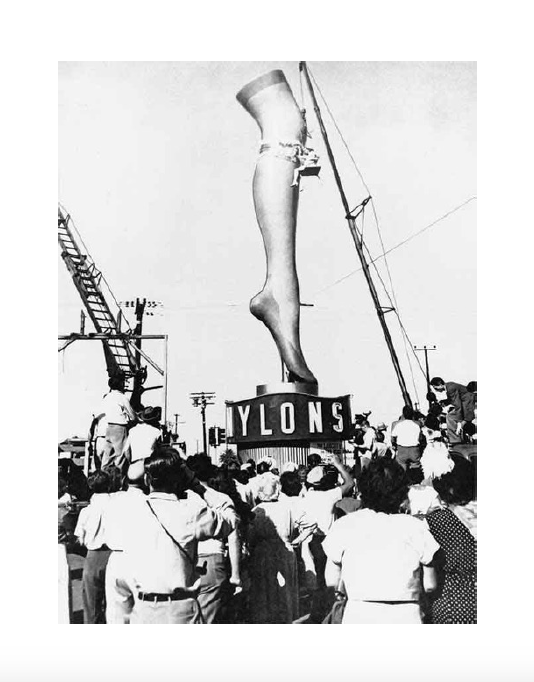
Dr. Christine Hume I first came across the Nylon Riots while researching parachutes for a short essay I was commissioned to write for an art catalogue years ago. It stayed with me; no one I know had heard of the…

JNT 49.2 Featured Author: Dr. Sandra M. Leonard
Dr. Sandra M. Leonard In my first year of teaching freshman English composition I had the following preconceptions about plagiarism: that it was fairly rare, rather malicious, and always indicative of poor writing. Ten years of teaching, a dissertation,…

JNT 49.2 Featured Author: Dr. David Stromberg
Dr. David Stromberg Salinger: Pain and Abuse We sometimes hear talk about old tattered copies of our favorite paperbacks – but sometimes we also have them. In my case, this is true of Salinger’s Raise High the Roof Beam, Carpenters…
JNT 49.2 Featured Author: Dr. Paula Matín-Salván
Paula Martín-Salván Joseph Conrad was my first love, academically speaking. I wrote my undergraduate dissertation on the metaphors of visibility and opacity in Lord Jim and Heart of Darkness, but then I moved on to pursue a PhD on contemporary…

JNT 49.1 Featured Author: Dr. Muna Abd-Rabbo
Dr. Muna Abd-Rabbo I first read Chinua Achebe’s essay “An Image of Africa: Racism in Conrad’s Heart of Darkness” about twenty years ago when I was still a BA student, and it really made me see Conrad and the whole…

JNT 49.1 Featured Author: Dr. Hannah Courtney
Dr. Hannah Courtney For some time now, I’ve lived and breathed narrative trickeries. Twists that pull the storyworld rug out from under you, endings that frustrate your genre-formed expectations, messy crossovers between fiction and nonfiction, and the most dastardly form…
"Having a crisis of faith is essentially the new normal in the humanities, but refracted through the world’s new abnormal, it became something else entirely, especially when teaching a student population disproportionately hit by the virus, as I do."
- JNT 51.1 Featured Author: Dr. Frederick J. Solinger
"As an audience member I witnessed, from a distance, the accelerated lifespan of a temporary encampment transitioning into something resembling a city, forged by people who shared little besides having survived inhumane traumas. "
- JNT 50.3 Featured Author: Dr. Nasia Anam
"The tempestuousness of Rhys, the provocativeness of Mansfield and the theoretical weight of Woolf, all come to bear equally, in fractious albeit enriching ways, in this peregrination through women’s rooms."
- JNT 50.1 Featured Author: Dr. Ruchi Mundeja
"Writing the essay in 2019 felt like a charm against the current erosion of women’s rights compounding the historic lack of women’s autonomy and voice."
- JNT 49.3 Featured Author: Dr. Christine Hume
"One cannot truly think unless one ceases the banal activities and drudgery that take up too much of our brief lives. Such a simple idea is foundational to all of Arendt’s work, from The Human Condition (1958) to her unfinished masterpiece The Life of the Mind (posthumously published, 1978)."
- JNT 48.3 Featured Author: Professor Eric Keenaghan
"If critics mention the texts at all, they tend to offer compelling assessments that the characters and events depicted are stereotypical, offensive, and responsible for perpetuating real-world racism or injustice."
-JNT 51.2 FEATURED AUTHOR SARAH COPLAND